
Old Dubai street food: what to eat and where to find it
Updated 2026-10-13
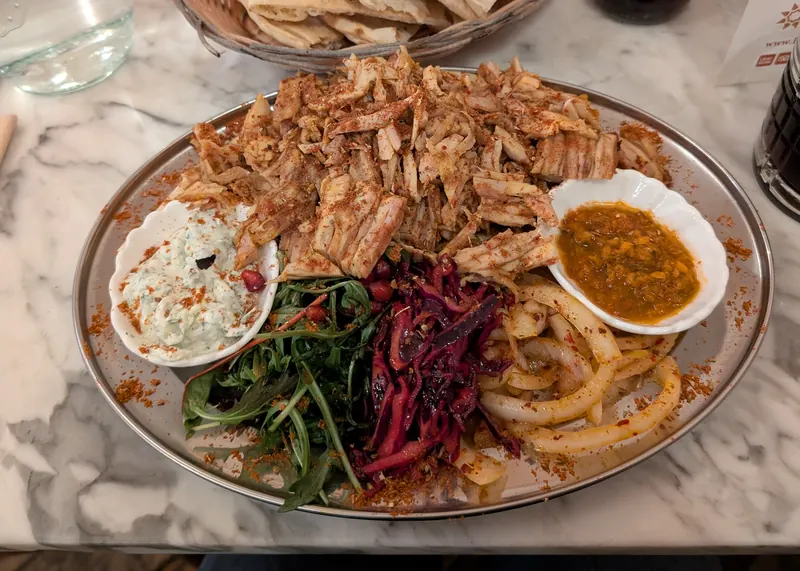
Short answer: the best street food in Dubai is not in the malls. It is in the older neighbourhoods on both banks of Dubai Creek: Bur Dubai, around Al Fahidi and the Old Souk, and Deira, around the Spice and Gold Souks. Start with shawarma, falafel with hummus, Indian street snacks and a glass of karak tea, and finish with something sweet such as kunafa. Most of it is cheap, quick and eaten standing up or at a plastic table, and that is exactly the point.
Dubai's food story is a trading story. For generations the Creek brought dhows from Iran, the Indian subcontinent, East Africa and the rest of the Gulf, and the people who came with them brought their cooking. The result is a street food scene where a Levantine shawarma counter, a South Indian snack shop and an Emirati sweet stall can sit within a few minutes' walk of each other. This guide covers what to eat, where in Old Dubai to look and how to make the most of a few hours.
Where "Old Dubai" is
When locals talk about Old Dubai they usually mean the two historic districts facing each other across Dubai Creek.
- Bur Dubai is on the southern bank. It includes the Al Fahidi Historical Neighbourhood (also called Bastakiya), with its coral-stone lanes and wind towers, and the covered Old Souk running along the water.
- Deira is on the northern bank, reached by the wooden abra water taxis. It is home to the Spice Souk, the Gold Souk and a dense grid of small shops, cafeterias and restaurants.
The two sides are connected by the abra crossing, which is half the fun. A food walk that starts in Al Fahidi, crosses the Creek and ends in Deira covers both banks without any need for a taxi.
What to eat in Old Dubai
Shawarma
The default street snack of the Gulf. Marinated chicken or meat is stacked on a vertical spit, shaved thin, and wrapped in Arabic bread with garlic sauce, pickles and sometimes fries. Every counter has its own style: some go heavy on garlic, some add a pressed, toasted finish to the wrap. If you see a long queue of people who clearly work nearby, that is the one to join.
Falafel and hummus
Crisp chickpea fritters, usually served in bread with salad and tahini, or on a plate next to a bowl of hummus with olive oil. It is a good choice for vegetarians and an easy first bite if you are not sure what you like yet.
Indian street snacks
Bur Dubai and Deira have long-established South Asian communities, and with them come samosas, pakoras, chaat and other fried and spiced snacks, often sold from small cafeterias. They are inexpensive, filling and made to be eaten on the go.
Karak and Arabic coffee
Karak is strong black tea boiled with milk, sugar and spices such as cardamom, served in a small glass. It is the everyday drink of the UAE, and you will see it at almost every cafeteria. If you prefer it less sweet, ask before it is poured. Gahwa, Arabic coffee, is a different thing: light, often flavoured with cardamom, poured from a dallah into small cups and traditionally served with dates.
Machboos
The UAE's spiced rice dish, cooked with chicken, meat or fish and a blend of spices. It is more of a sit-down meal than a street snack, but worth trying if you want something Emirati rather than imported.
Something sweet
Kunafa is shredded or fine pastry baked over soft cheese and soaked in syrup, best eaten warm while the cheese still stretches, often topped with pistachio. Look out too for fried dough balls in syrup, similar to Emirati luqaimat. They are small, sticky and very hard to stop eating.
A simple Old Dubai food route
If you are exploring on your own, this order works well because it follows the natural walking route and leaves dessert for last.
- Start in Al Fahidi. Walk the coral-stone lanes first, before you are full. It is the historic heart of the city and gives context for everything you eat afterwards.
- Eat your way through the Bur Dubai lanes. This is the place for shawarma, falafel and a first karak.
- Cross the Creek by abra. It is a short ride past moored dhows, and it lands you in Deira.
- Browse the Spice Souk. You will smell it before you see it: saffron, cardamom, dried lemons (loomi), dried fruit and more. It is a good place to pick up spices to take home.
- Walk through to the Gold Souk. Not food, but it is right there and worth seeing.
- Finish with something sweet in Deira, then head home by metro or taxi.
That is also roughly the shape of our own tour, which starts at Arabian Tea House in Al Fahidi and finishes at Al Ras Metro Station in Deira. See the route for the usual flow.
Tips for eating street food in Old Dubai
- Go hungry, and pace yourself. Portions are bigger than they look, and the best approach is many small tastings rather than one big meal.
- Carry some cash. Small shops and cafeterias are quicker with cash, even though many also take cards.
- Prices vary. Street food here is generally good value, but prices change from shop to shop and over time, so we do not quote them. Look at the menu board or ask before you order.
- Follow the locals. A busy counter means fresh food and fast turnover.
- Dress for the heat. In the warmer months, a late-afternoon or evening walk is far more comfortable than midday.
- Respect local customs. Dress modestly in the older districts, and during Ramadan check local guidance about eating and drinking in public during daylight hours.
- Mention any allergies clearly. Nuts, sesame and dairy are common in many dishes and sweets.
Doing it on your own or with a guide
Exploring on your own is perfectly possible; Old Dubai is safe and very walkable. The challenge is knowing which of the dozens of similar-looking counters is worth your stomach space, and what to order once you are there.
That is what our private tour is for. A local food guide leads your group through about three hours of tastings, stories, souks and an abra ride, orders for you and explains the background to each dish. Typical tastings include Arabic shawarma, falafel with hummus, Indian street snacks, local tea and traditional desserts such as kunafa, depending on what is fresh that day. The tour is private: only your group, at your pace, and guides have adjusted tastings for vegetarians and other dietary needs. See prices, what's included and guest reviews.
Frequently asked questions
Where is the best street food in Old Dubai?
In the older districts on both sides of Dubai Creek: the lanes of Bur Dubai around Al Fahidi and the Old Souk, and Deira around the Spice and Gold Souks. The abra ride connects the two.
What is the most famous street food in Dubai?
Shawarma is the everyday favourite, followed closely by falafel, and karak tea is the drink everyone knows. For dessert, kunafa is the one most visitors remember.
Is street food in Dubai expensive?
Generally it is good value, especially compared with hotel restaurants, but prices vary by shop and change over time. Check the menu board or ask before you order.
Can vegetarians enjoy Old Dubai street food?
Yes. Falafel, hummus and many Indian snacks are vegetarian. On our private tour, tell us your dietary requirements when you book and the guide adjusts the tastings.
How long does the Old Dubai food tour take and what does it cost?
About 3 hours. It costs USD 199 per private group of up to 6 from the meeting point in Al Fahidi, or USD 299 with hotel transfers. Book online through the booking box.
Where does the tour start and finish?
It starts at Arabian Tea House in Al Fahidi, where your guide waits 15 minutes before your start time, and finishes at Al Ras Metro Station in Deira. On the transfers option you are collected from and returned to your hotel.
Eat Old Dubai with a local food guide
Our private Old Dubai Street Food and Walking Tour takes about 3 hours: USD 199 per private group of up to 6 from Arabian Tea House in Al Fahidi, or USD 299 with hotel transfers. Tastings and the abra ride are included.
Secure card payment by Stripe · Instant email confirmation after payment · Free cancellation up to 24 hours before